


Every week I analyze a company’s fundamentals as part of my research work. My goal is to understand what drives their consistent performance. This is an educational post to understand the business and not a recommendation to buy the stock.
The complete version, with charts, numbers, risks, red flags and the valuation, is on our website. Read the detailed post here.
This week, Let’s explore the business & fundamentals of Gujarat Pipavav Port Ltd. NSE: GPPL.
Performance Chart
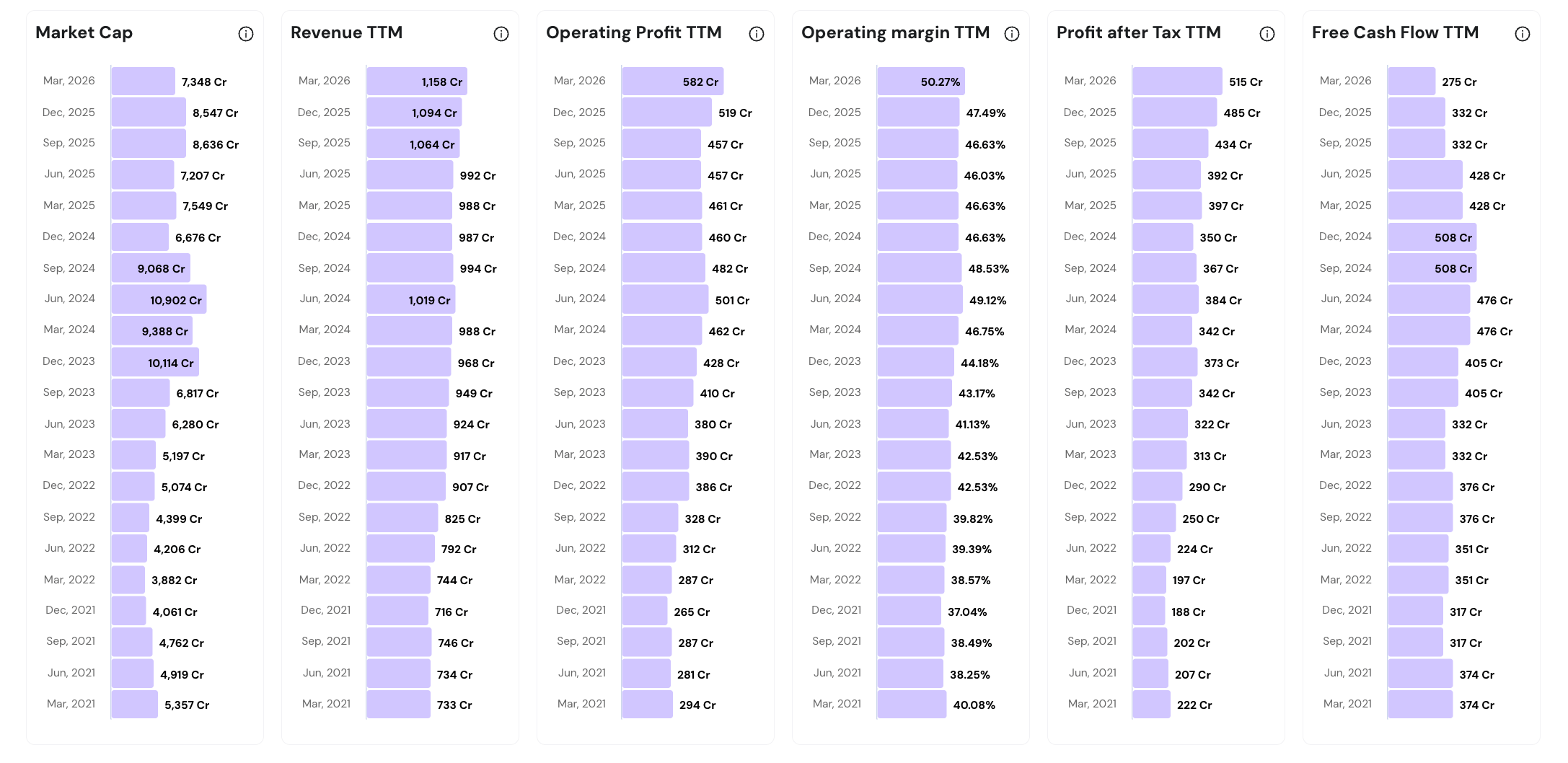
Their Road to Consistency
1. Overview and Business Model
The business model is simple. Picture a giant doorway between the ocean and inland India with Cargo ships docking at the berths. Gujarat Pipavav Port charges them to come alongside, then charges cargo owners to load, unload, and store goods. Then trains and trucks carry that cargo mostly towards North India. GPPL is India’s first private port and runs this gateway.
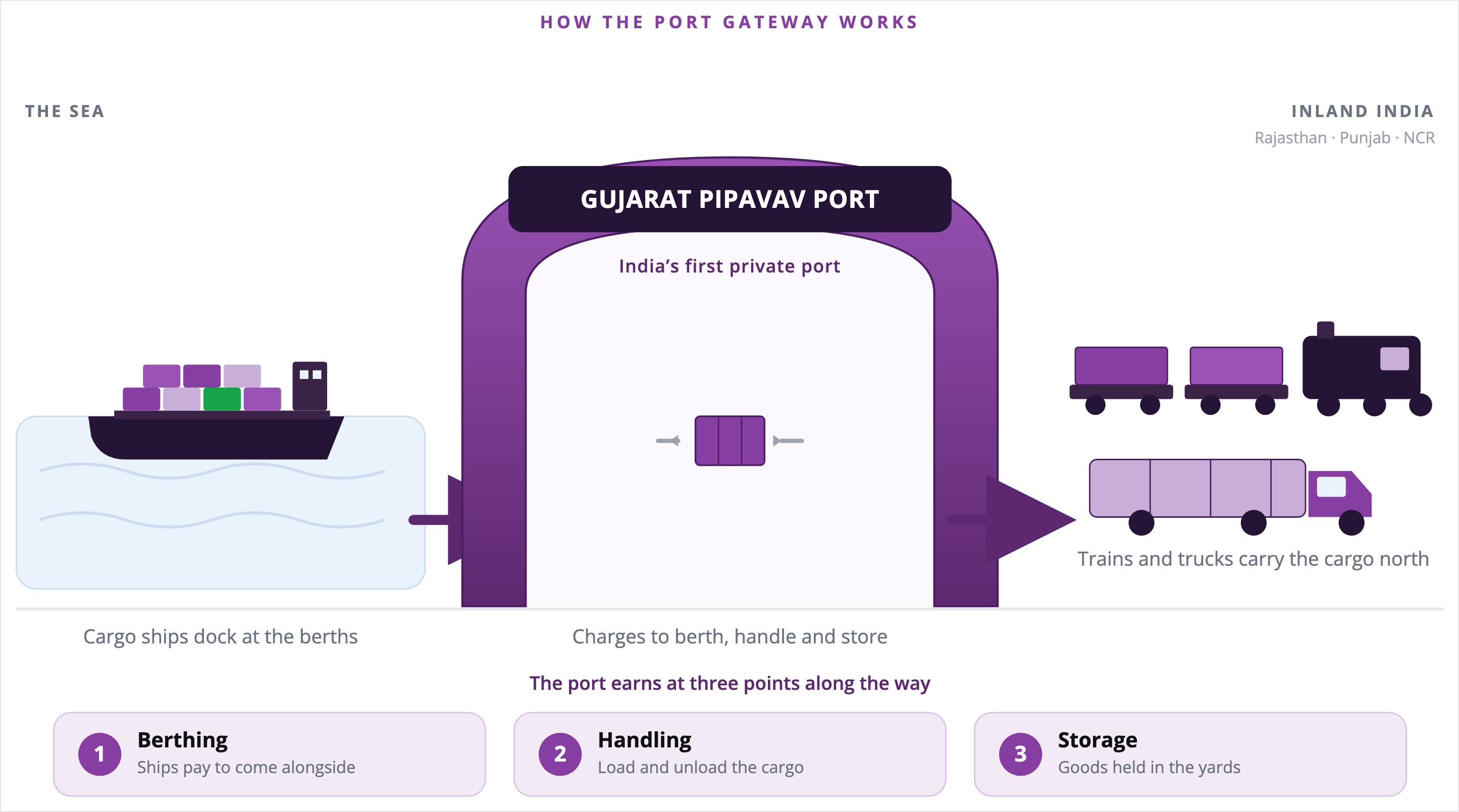
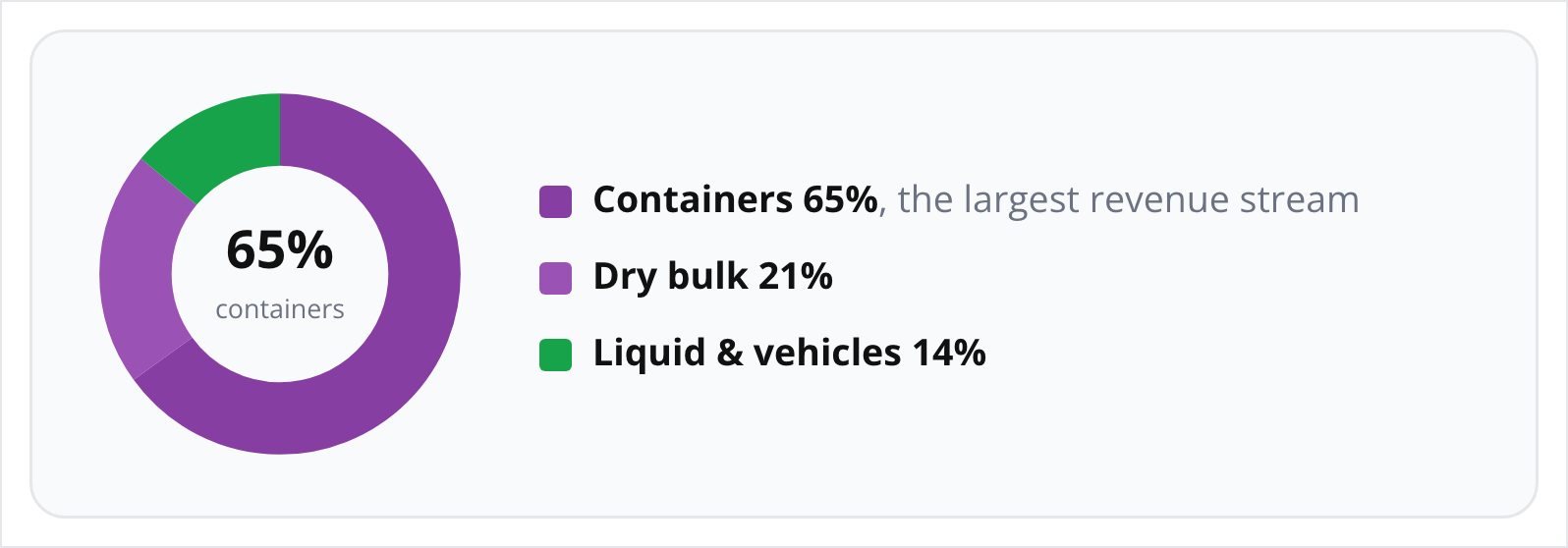
The port handles 4 cargo types. These are containers, dry bulk, liquid cargo, and vehicles that drive on and off ships. Containers drive most of the revenue.
Containers contributed over 65% of the topline in FY25. Containers and dry bulk together generate about 86% of annual operating income.
The port sits on Gujarat’s southwest coast. It feeds the industrial markets of Rajasthan, Punjab, and the National Capital Region.
It is a non-major port under the Gujarat Maritime Board. So it sets its own market-linked tariffs, unlike rate-regulated major ports.
The Netherlands-based APM Terminals, the ports arm of A.P. Moller-Maersk, holds a 44.01% promoter stake. This brings global terminal expertise and shipping ties.
Maersk Line alone contributed 20% of revenue in FY24. This captive cargo gives the port a steady baseline through shipping cycles.
The port controls a land bank of 1,561 acres. This room let it build warehouses and container yards right beside the berths.
The company carries no debt and funds expansions from internal cash. High margins convert into large, regular dividends.
2. Geographic Position
Some ports fight a daily battle against silt and tides. Pipavav does not. It sits outside the silt-heavy Gulf of Khambhat, with deep natural water and island shelter. Ships enter and leave around the clock. The port avoids the heavy dredging bills that drain rival operators.
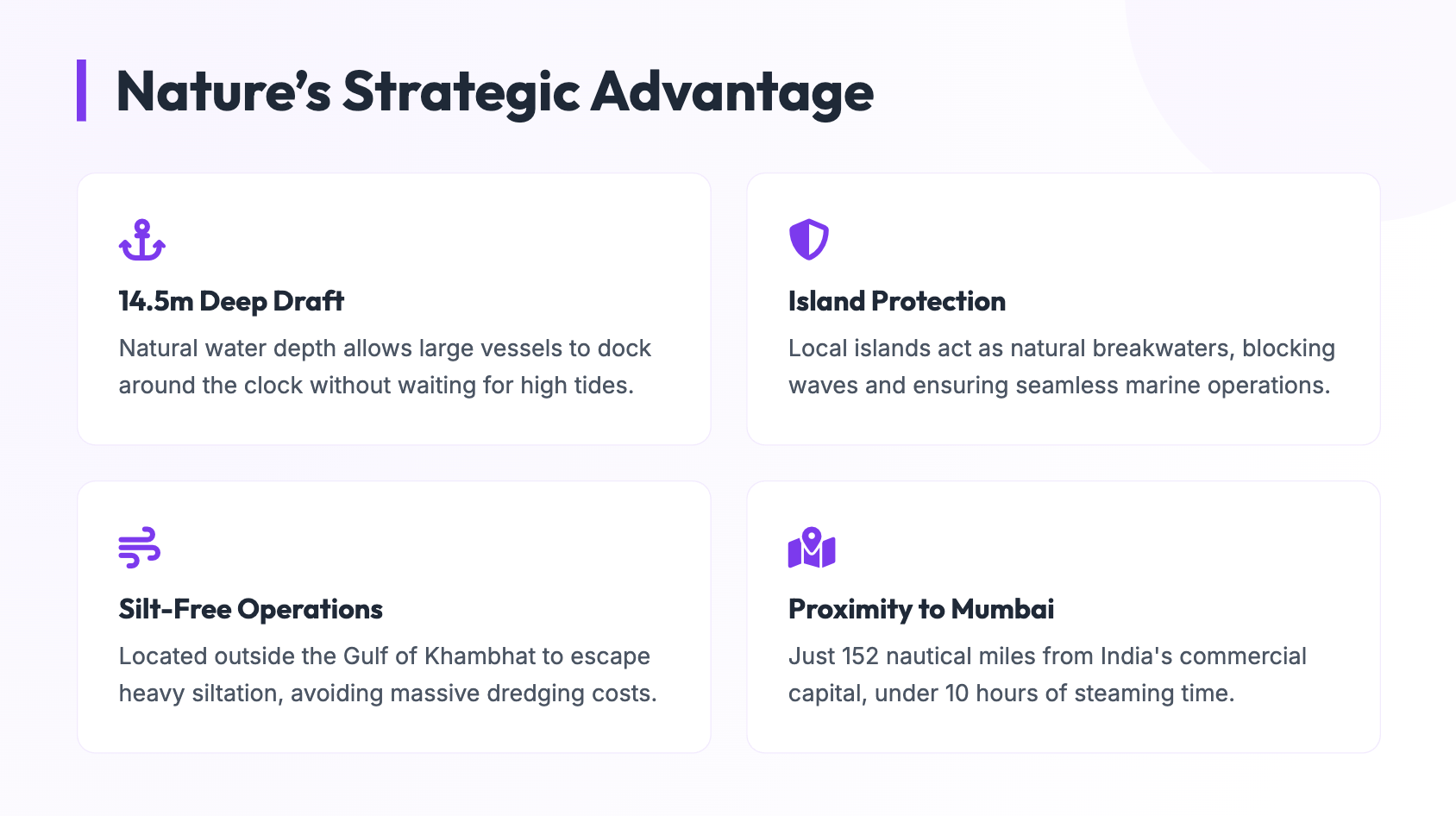
The port uses a natural water depth, called draft, of 14.5 metres. Large cargo vessels can dock without waiting for high tide.
2 local islands, Shiyalbet and Savaibet, act as natural breakwaters. They blocked rough waves and kept marine operations running through 2024 and 2025.
Sitting outside the Gulf of Khambhat, the port escapes heavy siltation. It avoids the constant maintenance dredging that drains capital at other ports.
Pipavav lies just 152 nautical miles from Mumbai. Vessels need under 10 hours of steaming time from India’s commercial capital.
The location opens a natural gateway to Rajasthan and Punjab. This drew steady cargo from the northwestern industrial belt.
A 11 km, four-lane expressway links the port directly to National Highway 8E. Heavy cargo moves quickly onto the national road network.
Round-the-clock access means no idle waiting for tides. Geography did the expensive work here that capital does elsewhere.
3. Landside Rail Evacuation
Moving cargo off the dock matters as much as bringing it in. Pipavav built its own rail backbone for this. A joint-venture railway connects the port to the national network. Electrified double-stack trains carry containers north in bulk, bypassing congested roads.
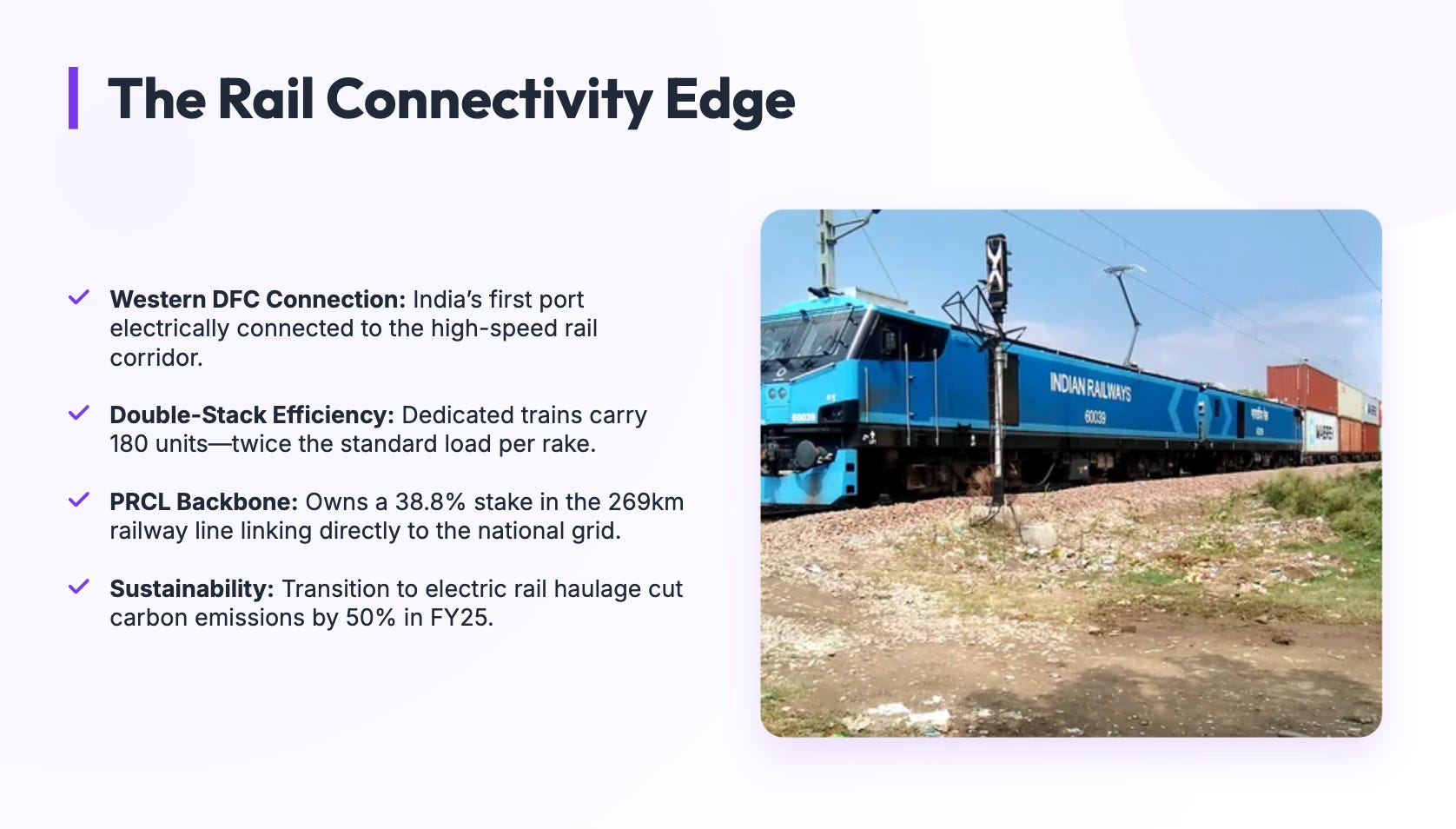
The port owns a 38.8% stake in Pipavav Railway Corporation. This venture built a 269-kilometre track linking the port to the national rail network.
That railway venture carries no debt and pays regular dividends. It hands the port a predictable cash stream beside its core fees.
In January 2024, Pipavav became India’s first port electrically connected to the Western Dedicated Freight Corridor, a freight-only high-speed rail line.
The corridor runs double-stack trains that load containers in two layers rather than one. Each train carries up to 180 units, double a normal train.
Electric haulage replaced diesel trucks on this route. Moving freight by rail cut carbon emissions by 50% in the year to March 2025.
In August 2024, the port handled 204 inward double-stack trains, its highest ever in a month. It dispatched 2,197 outward trains across 2024.
The line can run 22 trains each way daily. It was only half used in 2024, leaving large room to grow without fresh capital.
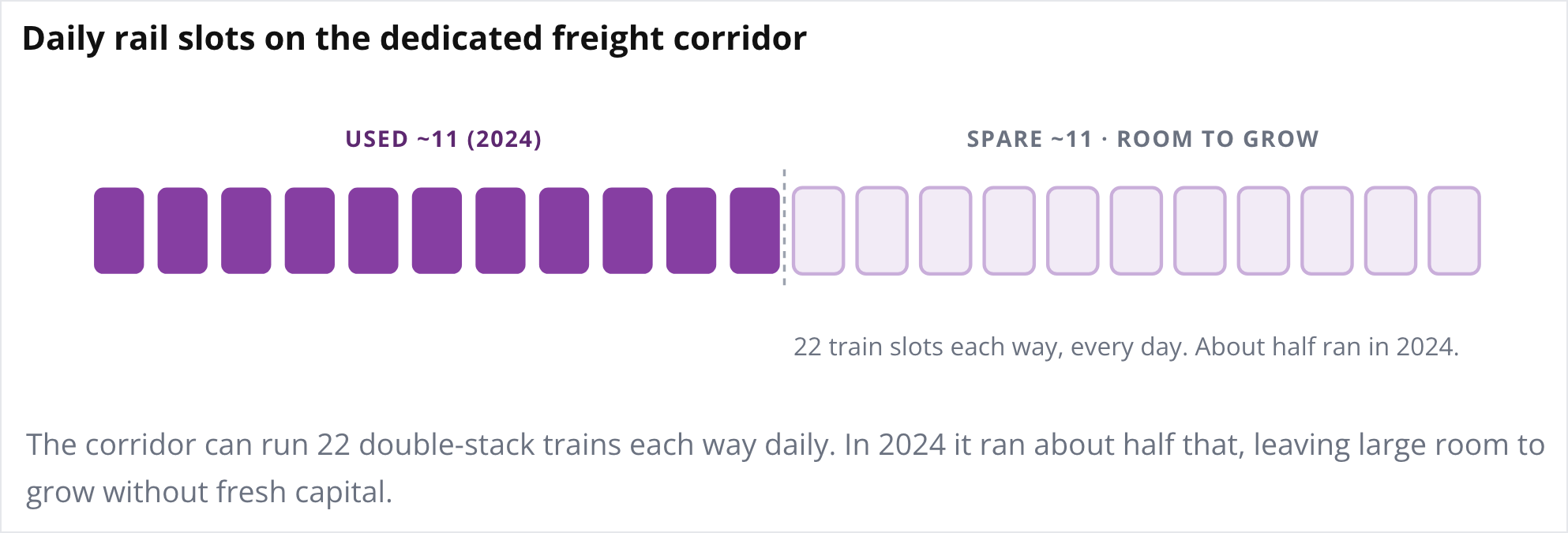
Reliable rail explains why northwestern exporters keep choosing Pipavav. Congestion-free evacuation is the port’s quiet edge.
4. Global Parent and Captive Cargo
A port is only as busy as the ships that call. Pipavav’s promoter is APM Terminals, the ports arm of A.P. Moller-Maersk. That lineage routes Maersk cargo through the port, plugs it into global shipping networks, and brings terminal technology local rivals cannot easily match.
APM Terminals holds a 44.01% promoter stake. The link gives Pipavav direct access to global terminal management and shipping networks.
Maersk Line accounted for 20% of the port’s revenue in FY24. This captive cargo cushions the port when industry volumes fall.
The port runs advanced terminal-operating software from its parent’s network. It optimises container tracking and yard storage, shortening ship turnaround times.
The parent’s lineage attracted three new weekly ocean services across 2024 and 2025. These connected Pipavav to Middle East and Gulf trade routes.
Global purchasing power let the port negotiate cheaper heavy machinery. This helped keep annual maintenance capital spending below ₹100 crore in FY25.
Parent training raised crane-operator skill levels. The port achieved a high 215.5 container moves per hour during 2023.
A decarbonisation push moved the port toward solar power. It sourced 45% of its electricity from solar by 2025.
5. Operational Efficiency
Speed at the berth is money for shipping lines. The faster a ship is loaded and sent off, the less fuel and time it burns. Pipavav has built a reputation for quick turnarounds and high crane productivity. That efficiency, plus pricing freedom, protects its margins.
The World Bank and S&P Global rank container ports for efficiency. Pipavav placed 26th worldwide, the only Indian port in the global top 40.
The port recorded 215.5 container moves per hour in 2023, its highest ever. Fast handling let ships resume voyages ahead of schedule.
Quick turnarounds saved an average of 2 hours 20 minutes per vessel in 2023. Across the year this freed almost 1,145 hours of early sailing.
The port handled its largest vessel parcel of 5,592 container units. It processed the load without landside gridlock.
On a major Maersk vessel, the port hit berth productivity of 140 moves per hour. This cut the ship’s total port stay in FY24.
As a non-major port, it sets its own market-linked tariffs. A 5% general hike in FY26 should lift medium-term revenue by 3% to 4%.
Pricing freedom is rare among Indian ports. Most major ports stay bound by regulated rates.
6. Balanced Cargo Mix
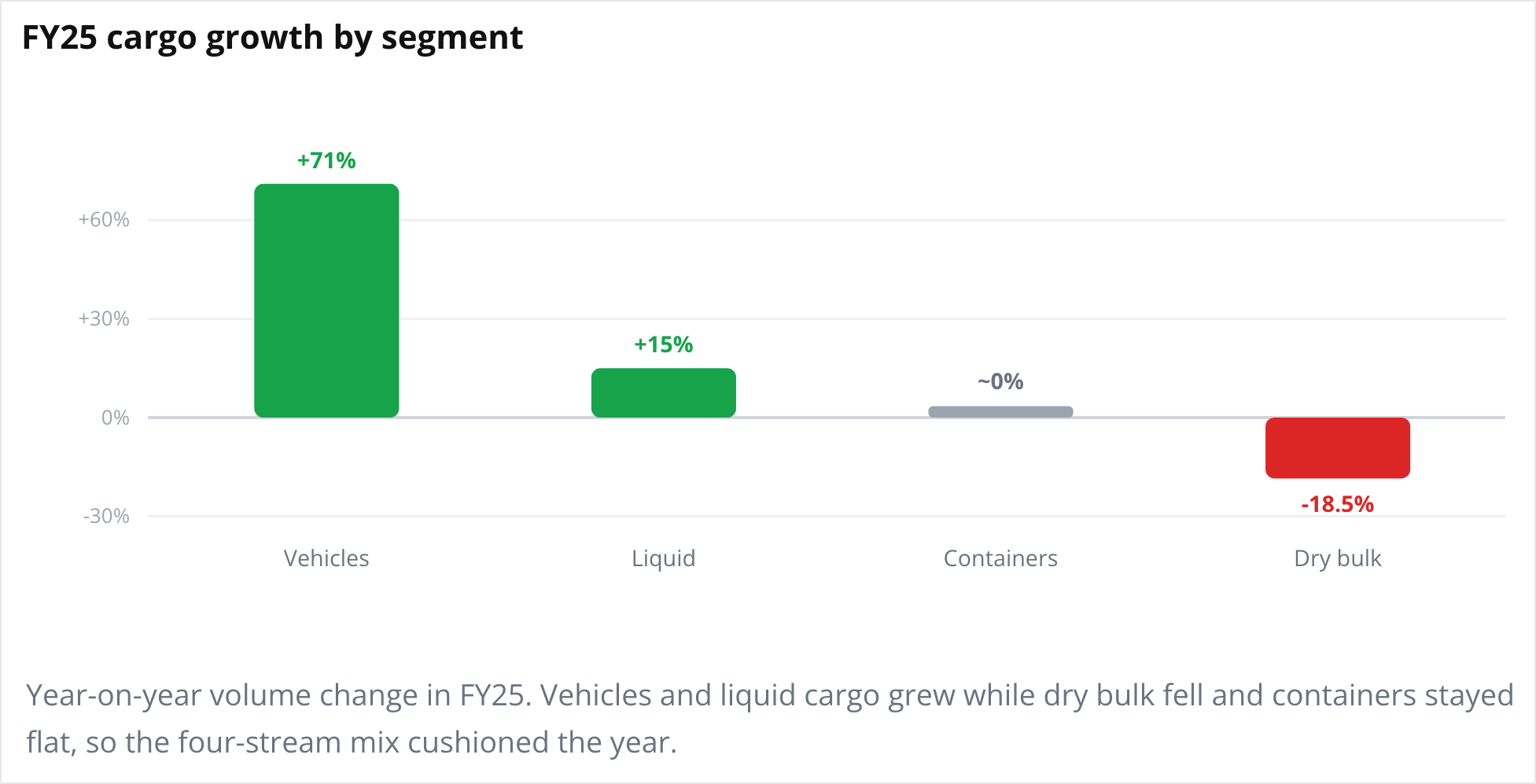
Container traffic rises and falls with global trade. A single-cargo port would swing with it. Pipavav runs 4 cargo streams, so weakness in one can be offset by strength in another. When containers slipped in FY25, liquid and vehicle cargo carried the load.
Container volumes have stayed broadly flat for years. The port handled about 660,000 units in FY26, still its largest revenue stream at 65% of the topline.
The flat container line is the honest counter to the growth story. Diversification, not containers, drives the incremental volume.
Liquid cargo grew 15% to 2.2 million tonnes in FY25. Rising domestic demand for imported gas powered the increase.
Vehicle handling, where cars drive on and off ships, surged 71% in FY25. The port moved 164,000 passenger vehicles that year.
Dry bulk fell 18.5% to 1.47 million tonnes in FY25. The segment leans heavily on government fertiliser tenders.
The port suspended coal handling in FY25 for operational reasons. Management is shifting toward cleaner cargo to cut dust and pollution risk.
Container capacity of 1.35 million units ran at just 51% in FY25. Bulk yards ran at 55%. This headroom lets the port add lines without new capital.
7. Liquid Cargo Expansion
Liquid cargo is Pipavav’s clearest growth runway. The port stores and pumps gas and fuels for energy companies, earning rent on tankage it does not own. A new berth under construction will more than double liquid capacity. Rising Indian gas demand underpins the plan.
The port handles 2 million tonnes of liquid cargo a year today. A dedicated liquid jetty and 12-metre water depth take large carriers.
A ₹700 crore project is building a new liquid berth. Commissioning is targeted for December 2026, funded entirely from internal cash.
Once live, the berth lifts liquid capacity from 2 million to 5.2 million tonnes. It is built to take very large gas carriers.
The port offers 450,000 kilolitres of tankage across 123 storage tanks. Private operators run these, so the port simply earns rent.
Working with Aegis Logistics, the port runs an LPG rail siding inside the terminal. A single train rake carries 1,200 tonnes of cooking gas.
Each gas rail rake replaced about 66 road tankers in 2025. Rail is safer and cheaper for the oil marketing companies.
The port loaded its 100th gas rail rake within 10 months of starting. Demand and the rail network scaled quickly.
8. Automotive Growth
Vehicle exports have become Pipavav’s fastest-rising business. Cars drive straight onto ships from dedicated yards, then sail to overseas markets. Maruti Suzuki and Honda anchor the volumes. A new partnership aims to roughly double the port’s car-handling capacity.
The port runs a vehicle yard built to handle 250,000 cars a year. A stockyard holds 6,000 cars beside a pre-delivery inspection centre.
In November 2025, the port handled a record 25,529 vehicles. That beat its previous monthly record by 18%.
It moved 48 car-carrying rail rakes in November 2025 alone. The traffic showed tight coordination between port, automakers, and railways.
Its largest single shipment of 2025 loaded 5,024 vehicles onto one carrier. The operation showed growing scale in vehicle exports.
Maruti Suzuki and Honda Cars drove the volumes. Their rising export commitments explain the record late-2025 performance.
In December 2025, the port signed an agreement with NYK India. The deal aims to lift annual car capacity to 500,000 units.
The expansion also targets electric-vehicle exports. The port is building readiness for battery-safety and charging needs.
Cars first moved by rail from the port in December 2023. Volumes climbed from about 25 rakes a month then to the late-2025 boom.
That’s it for today.
The full analysis on our website goes deeper: all the financial charts, the risks and red flags, and the valuation. Read the complete post here → https://finvezto.com/reports/gujarat-pipavav-port-debt-free-gateway
FINVEZTO.COM | Build Wealth. With Clarity.
Disclaimer: Anand Ganapathy K is a SEBI-registered Research Analyst with SEBI registration number INH000016630. This post is purely for learning purposes. I do not recommend buying or selling stocks mentioned in this newsletter. I do not hold any positions in the stock discussed. Securities market investments carry market risks. Kindly review all related documents before investing.
Thanks for a detailed analysis.